Prompt Panther: India’s Premier Action-Adventure Mobile Game
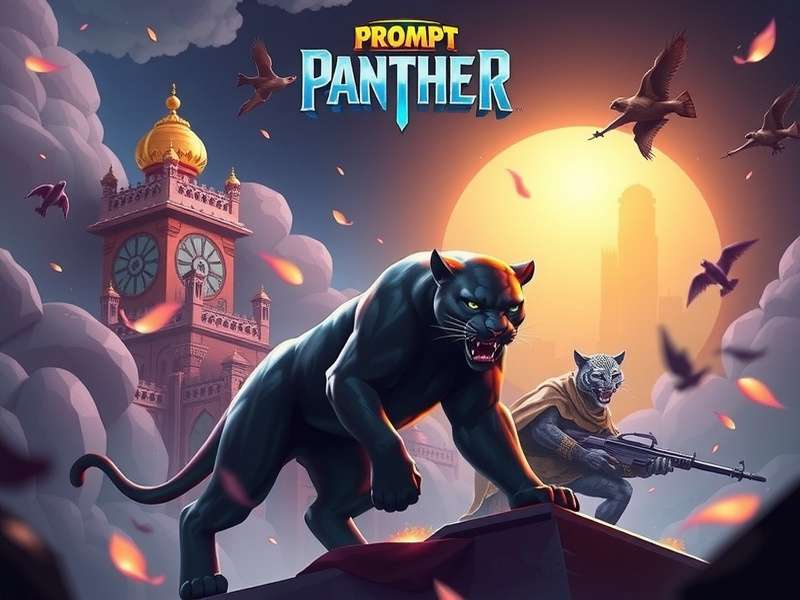
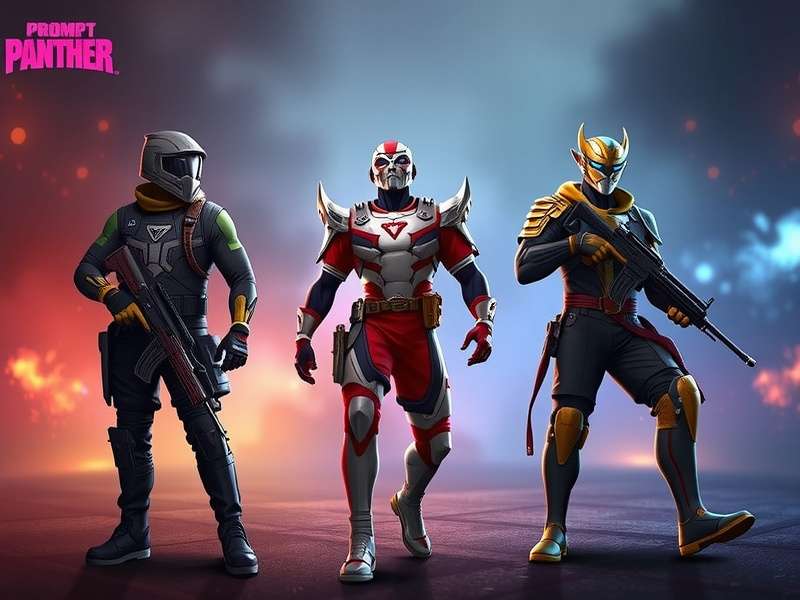
Official cover art of Prompt Panther featuring Indian-themed characters and landscapes
Introduction to Prompt Panther
Prompt Panther is a groundbreaking action-adventure mobile game developed by Raj Games Studios, a leading Indian game development company based in Bangalore. Launched in October 2022, the game quickly became a sensation in India, blending fast-paced gameplay with rich cultural elements that resonate deeply with local players. Unlike many international mobile games that struggle to adapt to Indian audiences, Prompt Panther was designed from the ground up with India’s diverse culture, preferences, and gaming habits in mind.
The core concept of Prompt Panther revolves around a fearless hero—dubbed the “Panther”—who embarks on a quest to protect ancient Indian treasures from evil forces. The game’s narrative draws inspiration from Indian mythology, folklore, and historical events, creating a storyline that feels both familiar and exciting to Indian players. From exploring the snow-capped peaks of the Himalayas to navigating the bustling streets of Varanasi, Prompt Panther takes players on a journey across India’s most iconic locations, each reimagined with stunning 3D graphics and immersive sound design.
What sets Prompt Panther apart from other mobile games in India is its unwavering focus on localization. Raj Games Studios invested heavily in understanding the needs of Indian gamers, conducting extensive market research across 28 states and 8 union territories. The result is a game that not only supports 12 major Indian languages but also incorporates regional festivals, traditions, and even local slang into its gameplay and dialogue. This attention to detail has helped Prompt Panther build a loyal fanbase of over 50 million active players in India alone, making it one of the top 5 most downloaded mobile games in the country.
In addition to its cultural relevance, Prompt Panther is praised for its accessible gameplay, which caters to both casual and hardcore gamers. The game features intuitive touch controls optimized for Indian mobile devices (many of which have mid-range specifications), offline play options (critical for regions with poor internet connectivity), and a progression system that rewards consistent play without forcing players to spend money. These features have made Prompt Panther a hit across all age groups, from teenagers in metropolitan cities to rural players looking for engaging entertainment.
Game Overview & Core Concept
Prompt Panther is set in a fictionalized version of India where ancient relics known as “Shakti Stones” hold immense power. These stones, scattered across the country, are being hunted by the “Asura Clan”—a group of villains inspired by Indian mythological demons—who plan to use their power to conquer the world. As the Panther, players must travel to different regions of India, defeat the Asura Clan’s minions, and collect the Shakti Stones before it’s too late.
The game’s world is divided into 8 major regions, each based on a real Indian state or geographical area. These regions include: Himalayan Peaks (Uttarakhand/Himachal Pradesh), Ganges Valley (Uttar Pradesh/Bihar), Southern Temples (Tamil Nadu/Kerala), Desert Oasis (Rajasthan), Eastern Jungles (Assam/Meghalaya), Coastal Cliffs (Goa/Maharashtra), Plains Fortresses (Punjab/Haryana), and Urban Ruins (Delhi/Mumbai). Each region has its own unique environment, enemies, and challenges, ensuring that gameplay remains fresh and engaging.
Players can customize their Panther with a wide range of outfits, weapons, and abilities, many of which are inspired by Indian culture. For example, the “Rajput Warrior” outfit features traditional armor and a sword modeled after those used by Rajput kings, while the “Yogi Sage” outfit grants magical abilities based on yoga and meditation. Weapons include the “Vajra Axe” (inspired by Indra’s thunderbolt), the “Katar Daggers” (a traditional Indian melee weapon), and the “Lotus Bow” (a bow adorned with lotus motifs, symbolizing purity in Indian culture).
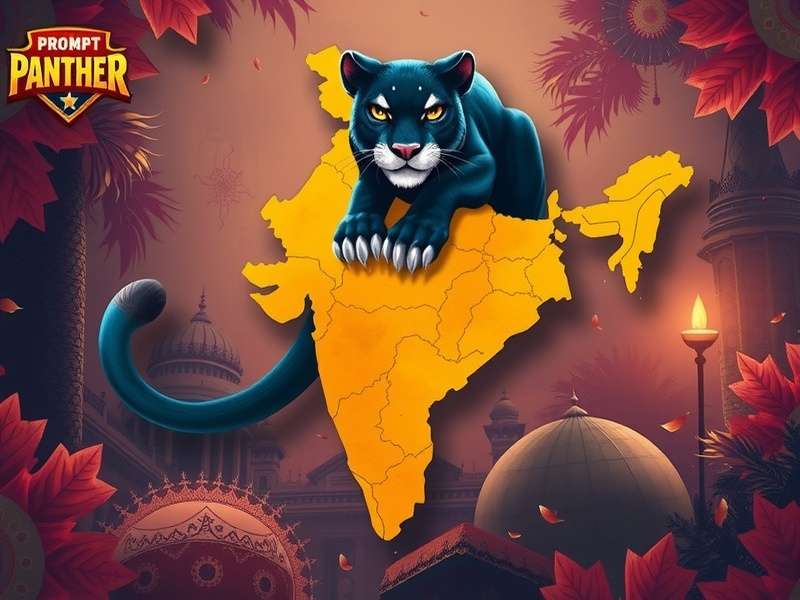
Map of Prompt Panther’s game world, highlighting the 8 Indian-inspired regions
Game Modes in Prompt Panther
Prompt Panther offers four main game modes, each catering to different player preferences: Story Mode, Battle Royale, Co-op Missions, and Daily Challenges. Let’s explore each mode in detail:
Story Mode: This is the game’s primary mode, where players follow the Panther’s quest to collect the Shakti Stones. The mode consists of 120 levels (15 per region), each with a unique objective—from defeating a boss enemy to solving puzzles based on Indian riddles. The Story Mode features full voice acting in 12 Indian languages, with dialogue written by local writers to ensure authenticity. For example, characters in the Southern Temples region speak Tamil with regional slang, while those in the Desert Oasis use Rajasthani phrases.
Battle Royale: A 100-player mode where players compete to be the last one standing. The Battle Royale map is a massive open world combining elements from all 8 regions, such as a Rajput fortress in the desert, a Tamil temple in the south, and a Himalayan village in the north. Players can use vehicles like auto-rickshaws, camels, and even elephants to navigate the map, adding a uniquely Indian twist to the battle royale genre. The mode also features event-specific zones, such as a Diwali market during the festival season, where players can collect rare loot.
Co-op Missions: Players can team up with 2-4 friends to complete challenging missions, such as defending a Shakti Stone from waves of enemies or raiding an Asura Clan stronghold. Co-op Missions require teamwork and strategy, and they reward players with exclusive items that can’t be obtained in other modes. The game’s social features make it easy to connect with friends—players can create clans (called “Panther Packs”) and chat using voice or text in their preferred Indian language.
Daily Challenges: These are short, 5-10 minute missions that refresh every 24 hours. Daily Challenges are designed to be accessible for casual players, with objectives like collecting a certain number of items or defeating a specific enemy. Completing Daily Challenges earns players “Panther Points,” which can be redeemed for in-game currency, outfits, or weapons. The challenges often tie into Indian festivals—for example, during Holi, players might be tasked with collecting colored powder to defeat enemies, while during Eid, they can earn rewards by helping NPCs prepare for the celebration.
Core Gameplay Mechanics
Prompt Panther’s gameplay is built around three core mechanics: combat, exploration, and progression. These mechanics are designed to be easy to learn but difficult to master, ensuring that both new and experienced players can enjoy the game.
Combat System
The game’s combat system is a mix of melee and ranged attacks, with a focus on combo moves and special abilities. Players can perform basic attacks by tapping the screen, and combo attacks by swiping in different directions. Each weapon has its own unique combo set—for example, the Katar Daggers allow for fast, successive strikes, while the Vajra Axe delivers slow but powerful blows that can knock down multiple enemies.
Special abilities, called “Shakti Powers,” are unlocked as players progress through the game. These abilities are based on Indian mythology and include: “Agni Blast” (a fire attack inspired by Agni, the god of fire), “Varuna Wave” (a water attack based on Varuna, the god of the oceans), and “Vayu Dash” (a speed boost inspired by Vayu, the god of wind). Each Shakti Power has a cooldown period, so players must use them strategically during battles.
Enemies in Prompt Panther are also inspired by Indian mythology and folklore. Common enemies include “Rakshasa Warriors” (demonic soldiers with brute strength), “Yaksha Archers” (mythical creatures that shoot poison arrows), and “Pishacha Thieves” (shape-shifting demons that steal in-game items). Boss enemies are even more impressive, such as “Mahishasura” (a buffalo-headed demon king) and “Kaliya Naag” (a giant serpent inspired by the myth of Krishna and Kaliya).
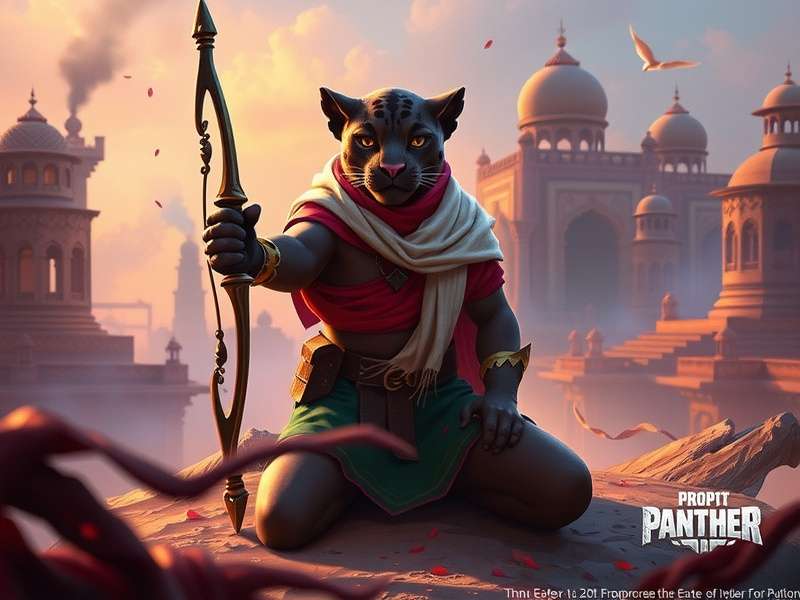
Combat gameplay in Prompt Panther showing the Panther using Katar Daggers to defeat Rakshasa Warriors
Exploration & Movement
Exploration is a key part of Prompt Panther, with each region offering a vast open world to discover. Players can move freely across the map, climbing mountains, swimming in rivers, and exploring hidden caves. The game’s movement system is smooth and responsive, with a “parkour” mechanic that allows the Panther to jump, slide, and climb over obstacles with ease.
One of the most popular features of the game’s exploration is the “Treasure Hunts.” Scattered throughout each region are hidden treasures, such as ancient coins, rare artifacts, and secret weapons. These treasures are often located in hard-to-reach places, requiring players to solve puzzles or complete small challenges to access them. For example, in the Southern Temples region, players might need to match Tamil temple carvings to unlock a hidden chamber, while in the Desert Oasis, they might have to navigate a maze of sand dunes to find a Rajput treasure chest.
To aid in exploration, Prompt Panther includes a “Compass” feature that points players toward objectives, treasures, and nearby enemies. The Compass can be customized to show only the information players want, making it useful for both casual exploration and focused questing. Additionally, players can unlock mounts as they progress through the game, such as elephants (which can carry multiple players and smash through obstacles) and camels (which are fast and can traverse desert terrain without slowing down).
Progression System
Prompt Panther’s progression system is designed to reward players for their time and skill, without relying on pay-to-win mechanics. Players earn experience points (XP) by completing missions, defeating enemies, and exploring the game world. As they level up, they unlock new weapons, abilities, and outfits, as well as access to new regions and game modes.
The game also features a “Skill Tree” that allows players to customize their Panther’s abilities. The Skill Tree is divided into three branches: Combat, Exploration, and Support. The Combat branch focuses on improving attack power, combo damage, and Shakti Powers, while the Exploration branch enhances movement speed, climbing ability, and treasure-finding skills. The Support branch unlocks passive bonuses, such as increased health, faster cooldowns, and better loot drops.
In-game currency comes in two forms: “Panther Coins” (earned through gameplay) and “Shakti Gems” (earned through Daily Challenges or purchased with real money). Panther Coins can be used to buy basic items, such as weapons and outfits, while Shakti Gems are reserved for rare items, such as legendary weapons and limited-edition festival outfits. Importantly, all core gameplay content can be unlocked using Panther Coins, ensuring that players who don’t want to spend money can still enjoy the full game.
Key Features of Prompt Panther
Prompt Panther stands out in India’s crowded mobile game market thanks to its unique features, which are tailored to the needs and preferences of Indian players. Below are some of the game’s most popular features:
Multi-Language Support
One of Prompt Panther’s biggest selling points is its support for 12 major Indian languages, including Hindi, Tamil, Telugu, Bengali, Marathi, Gujarati, Kannada, Malayalam, Punjabi, Urdu, Oriya, and Assamese. This is a game-changer for players in regional India, many of whom prefer to play games in their native language. The game’s dialogue, menus, and tutorials are all fully localized, with voice acting by local artists to ensure authenticity.
For example, in Tamil Nadu, the game’s voice actors include popular Kollywood dubbing artists, while in Punjab, the dialogue features colloquial Punjabi phrases like “ki haal hai bhai?” (how are you, brother?) and “chak de phatte!” (let’s go!). This level of localization has helped Prompt Panther resonate with players in non-Hindi-speaking regions, where many international games fail to gain traction.
Offline Play Option
Internet connectivity is a major issue in many parts of India, especially in rural areas. To address this, Prompt Panther includes a full offline play mode, allowing players to enjoy Story Mode, Daily Challenges, and even some Co-op Missions without an internet connection. The offline mode syncs progress with the online server once a connection is restored, so players never lose their hard-earned rewards.
The offline mode has been a huge hit in rural India, where mobile data is often expensive or unavailable. According to Raj Games Studios, over 30% of Prompt Panther’s active players in India use the offline mode regularly, making it one of the game’s most popular features.
Indian Festival Events
Prompt Panther regularly hosts limited-time events tied to major Indian festivals, such as Diwali, Holi, Navratri, Eid, Christmas, and Pongal. These events feature exclusive content, such as festival-themed outfits, weapons, and missions, as well as special rewards that can only be obtained during the event period.
For example, the Diwali event (“Deepavali Dhamaka”) transforms the game’s urban regions into a festival of lights, with NPCs celebrating by lighting diyas and exchanging sweets. Players can complete missions like “Protect the Diwali Market” (defending vendors from Asura minions) and “Collect Firecrackers” (using firecrackers to defeat enemies) to earn the “Diwali Rajah” outfit and the “Lakshmi Bow” (a weapon inspired by the goddess of wealth). Similarly, the Holi event (“Holi Hai!”) allows players to throw colored powder at enemies to stun them, and rewards them with the “Holi Ranger” outfit and the “Rangoli Dagger.”
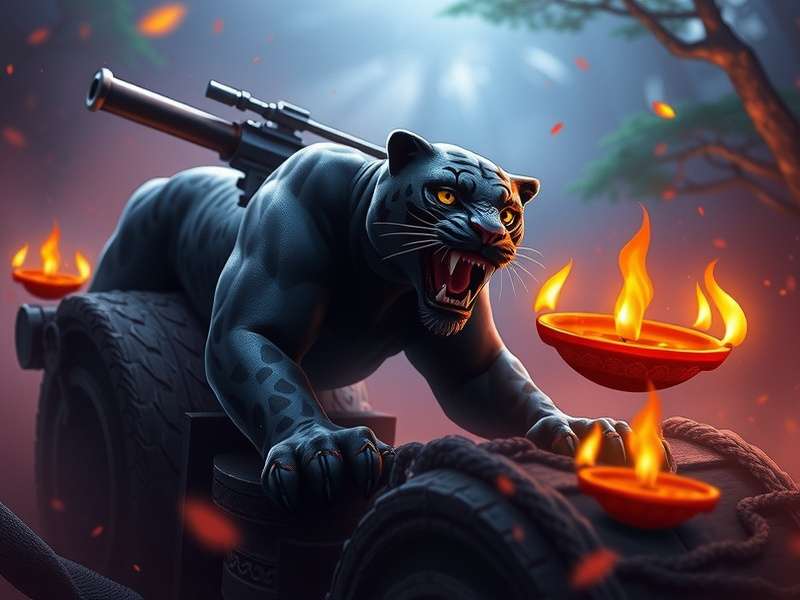
Scene from Prompt Panther’s Diwali event, showing the game’s urban region decorated with diyas and lights
Local Payment Methods
To make in-game purchases accessible to Indian players, Prompt Panther supports a wide range of local payment methods, including UPI (Unified Payments Interface), Paytm, PhonePe, Google Pay, Amazon Pay, and even cash payments through PayPoint and MobiKwik. This is crucial in India, where many players prefer to use UPI or mobile wallets over credit cards.
The game also offers affordable in-game packages tailored to the Indian market, with prices starting as low as ₹10. For example, the “Shakti Starter Pack” costs ₹49 and includes 500 Shakti Gems, a rare weapon, and a 7-day XP boost. These affordable packages have made in-game purchases popular among players, with over 15% of Prompt Panther’s Indian players making at least one purchase.
Accessibility Features
Prompt Panther is designed to be accessible to players of all abilities, with a range of features that make the game easier to play. These include customizable controls (allowing players to adjust the size and position of on-screen buttons), adjustable difficulty levels (from “Casual” to “Hardcore”), and a “Low Data Mode” that reduces data usage for players with limited mobile data plans.
The game also includes a “Visual Aid” feature for players with visual impairments, which highlights important objects (like enemies and treasures) with bright colors and adds audio cues for key events. For players with hearing impairments, all in-game dialogue is accompanied by text, and sound effects have visual indicators (like a flash on the screen when an enemy attacks).
Localization in India: Adapting to Regional Tastes
Localization is at the heart of Prompt Panther’s success in India. Raj Games Studios understood that to win over Indian players, the game needed to go beyond just translating text—it needed to adapt to the country’s diverse cultures, traditions, and gaming habits. Below is a detailed look at how Prompt Panther was localized for India:
Language Localization
As mentioned earlier, Prompt Panther supports 12 major Indian languages, making it one of the most linguistically inclusive mobile games in the country. The localization process involved more than just translation—Raj Games Studios hired local writers and linguists to ensure that the game’s dialogue, menus, and tutorials felt natural and authentic to each language group.
For example, in Bengali, the game uses formal language for NPCs like kings and priests, and informal language for common villagers, reflecting the linguistic norms of West Bengal. In Punjabi, the dialogue includes popular slang terms like “sadda Punjab” (our Punjab) and “jatt di gall” (a Jatt’s word), which resonate with Punjabi players. The game also includes regional variations of Hindi, such as Bhojpuri (spoken in Uttar Pradesh and Bihar) and Haryanvi (spoken in Haryana), to cater to players in these states.
Cultural Adaptation
Prompt Panther’s cultural adaptation goes beyond language, with the game incorporating elements from India’s diverse cultures into every aspect of gameplay. For example:
- Outfits: The game’s outfits are inspired by regional clothing, such as the “Kanjeevaram Saree” (for female Panthers) from Tamil Nadu, the “Phulkari Dupatta” from Punjab, the “Bandhani Lehenga” from Gujarat, and the “Mekhela Chador” from Assam.
- Weapons: Weapons are modeled after traditional Indian weapons from different regions, such as the “Talwar” (a sword from Rajasthan), the “Odisha Patta” (a sword from Odisha), and the “Khanda” (a double-edged sword from Punjab).
- Music: The game’s soundtrack features regional music genres, such as Carnatic music (South India), Hindustani classical music (North India), Bhangra (Punjab), and Baul music (Bengal). Each region in the game has its own unique soundtrack, enhancing the immersive experience.
- Food & Items: In-game items and NPC interactions often involve regional food, such as dosas and idlis (South India), samosas and chaat (North India), rosogullas (Bengal), and dhoklas (Gujarat). For example, players can collect “Masala Chai” items to restore health, or “Ladoo” items to boost their Shakti Powers.
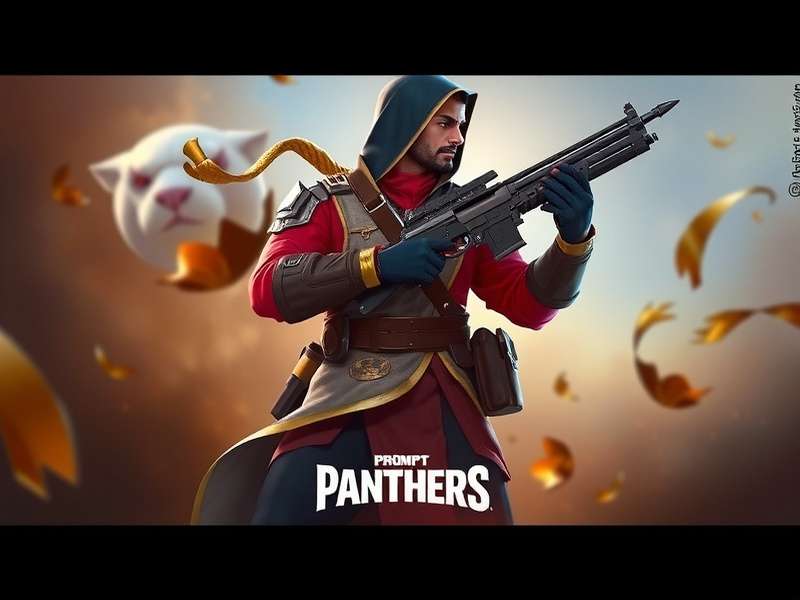
Examples of regional outfits in Prompt Panther, including the Kanjeevaram Saree (Tamil Nadu) and Phulkari Dupatta (Punjab)
Regional Version Differences
To cater to India’s regional diversity, Prompt Panther offers slight variations in gameplay and content across different regions. These differences are subtle but meaningful, ensuring that players in each region feel seen and represented.
For example, in South India (Tamil Nadu, Kerala, Karnataka, Andhra Pradesh), the game’s Story Mode includes additional missions inspired by South Indian mythology, such as defeating “Ravana” (from the Ramayana) and “Mahabali” (a mythical king from Kerala). The region’s Battle Royale map also features more temple structures and coconut groves, reflecting South India’s landscape.
In North India (Uttar Pradesh, Delhi, Punjab, Haryana), the game includes missions inspired by the Mahabharata, such as defending “Hastinapur” (the capital of the Kuru dynasty) and collecting “Arjuna’s Bow.” The Battle Royale map in North India features more forts, palaces, and agricultural fields, reflecting the region’s geography.
In East India (West Bengal, Assam, Odisha), the game’s missions draw inspiration from Bengali folklore and Assamese mythology, such as defeating “Chandi” (a goddess from Bengali mythology) and navigating the “Brahmaputra River.” The Battle Royale map includes more rivers, forests, and traditional Bengali huts.
These regional variations are updated regularly based on player feedback, ensuring that Prompt Panther continues to adapt to the needs of its diverse player base.
Download Statistics & Player Demographics in India
Since its launch in October 2022, Prompt Panther has achieved remarkable success in India, with download numbers and player engagement that rival some of the world’s top mobile games. Below are the latest download statistics and player demographics (as of October 2025):
Total Downloads in India
Prompt Panther has been downloaded over 58 million times in India across the Google Play Store and Apple App Store. This makes it the 3rd most downloaded action-adventure mobile game in India, behind only PUBG Mobile India and Free Fire Max. The game’s download growth has been consistent, with an average of 1.5 million new downloads per month in 2025.
Breakdown by platform:
- Google Play Store: 52 million downloads (89.7% of total)
- Apple App Store: 6 million downloads (10.3% of total)
The high percentage of Android downloads is consistent with India’s mobile market, where over 95% of smartphones run on Android. Prompt Panther is optimized for mid-range Android devices (such as Xiaomi Redmi, Samsung Galaxy A series, and Realme smartphones), which are the most popular in India, ensuring that the game runs smoothly on most players’ devices.
Regional Download Distribution
Prompt Panther’s downloads are spread across all regions of India, with the highest concentration in metropolitan cities and large towns. Below is the top 10 states by download count:
- Maharashtra: 8.2 million downloads (14.1%)
- Uttar Pradesh: 7.5 million downloads (12.9%)
- Tamil Nadu: 6.8 million downloads (11.7%)
- Delhi: 5.3 million downloads (9.1%)
- Karnataka: 4.7 million downloads (8.1%)
- Gujarat: 4.2 million downloads (7.2%)
- Punjab: 3.8 million downloads (6.6%)
- West Bengal: 3.5 million downloads (6.0%)
- Andhra Pradesh: 3.1 million downloads (5.3%)
- Rajasthan: 2.9 million downloads (5.0%)
The game’s popularity in Maharashtra and Uttar Pradesh can be attributed to the large population of these states, as well as the game’s localization for Marathi and Hindi speakers. Tamil Nadu’s high download count is a result of the game’s strong Tamil localization and marketing campaigns in the state, including partnerships with Kollywood celebrities.
Player Demographics
Prompt Panther’s player base in India is diverse, with players of all ages and genders. Below is a breakdown of key demographics:
Age Group:
- 13-18 years: 35% (most active age group)
- 19-24 years: 30%
- 25-34 years: 20%
- 35+ years: 15%
The game’s appeal to teenagers (13-18 years) is due to its fast-paced gameplay, social features, and festival events, which are popular among this age group. The 19-24 age group (college students and young professionals) enjoys the game’s competitive modes (like Battle Royale) and co-op missions, which allow them to play with friends.
Gender:
- Male: 65%
- Female: 35%
The game’s female player base is higher than the average for action-adventure mobile games in India (which is around 25%), thanks to its inclusive character designs, regional outfits, and emphasis on story over just combat. Many female players have praised the game’s female Panther character, who is portrayed as strong and independent, without relying on gender stereotypes.
Urban vs. Rural:
- Urban: 60%
- Rural: 40%
The high rural player count is a testament to Prompt Panther’s offline mode and optimization for low-end devices. Rural players often play the game in offline mode, using it as a form of entertainment during their free time.
Age and gender demographics of Prompt Panther players in India (2025 data)
Player Engagement Metrics
Prompt Panther not only has high download numbers but also strong player engagement, which is a key indicator of a game’s success. Below are the latest engagement metrics:
- Daily Active Users (DAU): 8.2 million
- Monthly Active Users (MAU): 22.5 million
- DAU/MAU Ratio: 36.4% (well above the industry average of 25%)
- Average Session Duration: 28 minutes
- Average Number of Sessions per Day: 2.3
- Retention Rate (7-day): 65%
- Retention Rate (30-day): 42%
The high DAU/MAU ratio and retention rates indicate that players are highly engaged with Prompt Panther and keep coming back to the game. The average session duration of 28 minutes is also impressive for a mobile game, as most mobile games have an average session duration of 15-20 minutes.
Player engagement is particularly high during festival events, with DAU increasing by 30-40% during events like Diwali and Holi. Many players log in multiple times a day during these events to complete missions and collect exclusive rewards.
Player Reviews & Ratings
Prompt Panther has received overwhelmingly positive reviews from Indian players, with high ratings on both the Google Play Store and Apple App Store. Below is a summary of player feedback:
Ratings
- Google Play Store: 4.7/5 (based on 1.2 million reviews)
- Apple App Store: 4.6/5 (based on 180,000 reviews)
These ratings are among the highest for action-adventure mobile games in India, reflecting players’ satisfaction with the game’s gameplay, localization, and features.
Positive Reviews
Most positive reviews highlight Prompt Panther’s localization, gameplay, and accessibility. Here are some examples of player reviews (translated from regional languages to English):
“Finally, a mobile game that speaks Tamil properly! The dialogue feels so natural, and the Tamil voice actors are amazing. The gameplay is smooth, and I love the South Indian-themed outfits. I’ve been playing for 6 months and haven’t gotten bored yet. 5 stars!” – Ravi, Tamil Nadu (Google Play Store)
“Prompt Panther is the best game I’ve played on my Redmi phone. It runs perfectly even on my old device, and the offline mode is a lifesaver because I don’t have internet at home. The Holi event was so much fun—throwing colored powder at enemies never gets old! Highly recommend to all Indian gamers.” – Priya, Uttar Pradesh (Google Play Store)
“I love how inclusive this game is. As a Bengali player, I was thrilled to hear Bengali dialogue and see outfits inspired by my culture. The co-op mode is great for playing with friends, and the progression system is fair—you don’t have to spend money to win. 10/10!” – Arnab, West Bengal (Apple App Store)
“The graphics are stunning for a mobile game. The Himalayan region looks so real, and the music is beautiful. I also appreciate that the game has adjustable difficulty—my younger brother (13) and I (25) both enjoy playing it, even though he’s a casual gamer and I’m more hardcore. Great job, Raj Games!” – Aman, Punjab (Google Play Store)
Constructive Feedback
While most reviews are positive, some players have provided constructive feedback for improvement. Common issues mentioned include:
- Occasional lag in Battle Royale mode during peak hours (especially in metropolitan cities)
- Limited content in some regional versions (e.g., players in Northeast India have requested more local-themed content)
- Longer wait times for co-op missions to match players
Raj Games Studios has been responsive to this feedback, releasing regular updates to address these issues. For example, the studio recently added dedicated servers for Battle Royale mode in Delhi, Mumbai, and Bangalore to reduce lag, and it announced plans to add more Northeast India-themed content in the next update (scheduled for December 2025).
Indian Player Guides for Prompt Panther
To help Indian players master Prompt Panther, we’ve compiled a comprehensive guide with tips, tricks, and strategies tailored to the game’s Indian localization and gameplay mechanics. Whether you’re a new player just starting out or a seasoned veteran looking to improve your skills, this guide has something for everyone!
Beginner’s Guide: Getting Started in Prompt Panther
If you’re new to Prompt Panther, follow these steps to get off to a strong start:
- Choose Your Language First: When you launch the game for the first time, select your preferred Indian language from the menu. This will make the game’s tutorials and dialogue easier to understand. If you ever want to change the language, you can do so in the “Settings” menu.
- Complete the Tutorial: The game’s tutorial is short (10-15 minutes) but comprehensive, teaching you the basics of combat, movement, and progression. Pay attention to the tutorial—it will help you avoid common mistakes and learn useful skills like combo attacks and Shakti Powers.
- Focus on Story Mode First: Story Mode is the best way to earn XP, unlock new weapons and abilities, and familiarize yourself with the game’s world. Complete as many Story Mode levels as you can before trying Battle Royale or Co-op Missions—this will give you a solid foundation of skills.
- Collect Daily Rewards: Don’t forget to log in every day to collect your daily rewards, which include Panther Coins, XP boosts, and occasionally rare items. Even if you only have a few minutes to play, logging in will help you progress faster.
- Upgrade Your Starter Weapon: Your starter weapon (the “Basic Katar”) is decent, but upgrading it early will make combat easier. Use Panther Coins to upgrade its attack power and unlock new combo moves. You can upgrade weapons in the “Armory” menu.
Advanced Combat Strategies
Once you’ve mastered the basics, use these advanced combat strategies to dominate enemies:
- Master Combo Attacks: Each weapon has a unique combo set—practice these combos to maximize damage. For example, the Vajra Axe’s combo (tap, tap, swipe down) delivers a powerful slam attack that can knock down multiple enemies. You can view combo lists in the “Skills” menu.
- Use Shakti Powers Strategically: Shakti Powers are powerful but have long cooldowns, so use them wisely. Save Agni Blast for groups of enemies, Varuna Wave for bosses, and Vayu Dash for escaping dangerous situations. You can reduce cooldown times by upgrading the “Support” branch of the Skill Tree.
- Dodge and Parry: Don’t just attack—learn to dodge (swipe left/right) and parry (tap the shield button at the right time) to avoid damage. Parrying an enemy’s attack will stun them, giving you a chance to land a combo.
- Exploit Enemy Weaknesses: Each enemy type has a weakness—learn them to defeat enemies faster. For example, Rakshasa Warriors are weak to fire attacks (Agni Blast), while Yaksha Archers are weak to water attacks (Varuna Wave). You can view enemy weaknesses in the “Enemy Database” menu.
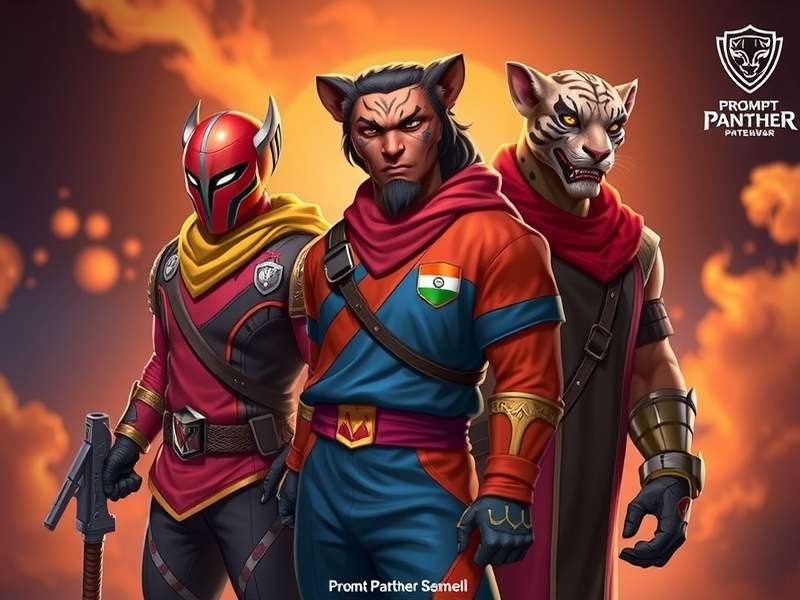
Advanced combat in Prompt Panther showing a player using a combo attack with the Vajra Axe
Battle Royale Tips for Indian Players
Battle Royale mode is one of the most popular modes in Prompt Panther—use these tips to increase your chances of winning:
- Land in Less Crowded Areas First: If you’re new to Battle Royale, avoid landing in popular areas like the Diwali Market or Rajput Fortress—these areas are crowded with experienced players. Instead, land in rural areas or small villages to collect loot and practice combat before engaging other players.
- Use Indian Vehicles to Your Advantage: Auto-rickshaws are fast and easy to maneuver in urban areas, while camels are great for desert terrain. Elephants are slow but can carry multiple players and smash through obstacles—use them to attack enemy teams or escape danger.
- Collect Festival Loot During Events: During festival events, the Battle Royale map has special loot zones with rare items. For example, during Diwali, the Diwali Market has firecracker-themed weapons that deal extra damage. Keep an eye on the map for these zones—they can give you a big advantage.
- Stick to Your Team: Battle Royale is a team game—stick with your Panther Pack to increase your chances of survival. Use voice chat to communicate with your teammates (in your preferred Indian language) and coordinate attacks and defenses.
- Use the Environment to Hide: The game’s Indian-themed environments offer plenty of hiding spots—use them to your advantage. Hide behind temple pillars, inside auto-rickshaws, or in the tall grass of agricultural fields to ambush enemies or avoid detection.
Regional Tips: Mastering Localized Content
Each region in Prompt Panther has its own unique challenges and opportunities—use these regional tips to succeed:
- South India (Southern Temples): The Southern Temples region has many narrow corridors and temple halls—use these to your advantage in combat by forcing enemies into close-quarters fights. Look for hidden treasure chests behind temple carvings—they often contain rare Tamil-themed weapons.
- North India (Plains Fortresses): The Plains Fortresses region has wide-open spaces and tall forts—use ranged weapons like the Lotus Bow to attack enemies from a distance. The forts offer great vantage points—climb to the top to scout for enemies and plan your attacks.
- East India (Eastern Jungles): The Eastern Jungles region is dense with trees and rivers—use the jungle to hide from enemies and set ambushes. The rivers are great for escaping danger—swim underwater to avoid detection.
- West India (Desert Oasis): The Desert Oasis region has sand dunes that can slow down enemies—use this to your advantage by leading enemies into dunes and attacking them from behind. Look for oases to restore health and collect water-themed items that boost Varuna Wave.
Localized Events & Campaigns in India
Prompt Panther is known for its exciting localized events and campaigns, which celebrate Indian festivals, traditions, and cultural milestones. These events not only add new content to the game but also foster a sense of community among Indian players. Below are some of the game’s most popular events and campaigns:
Diwali Event: Deepavali Dhamaka
Diwali (the Festival of Lights) is one of India’s most important festivals, and Prompt Panther’s Diwali event (“Deepavali Dhamaka”) is one of the game’s biggest annual events. The event runs for 15 days (from October to November) and features a range of exclusive content:
- Festival-Themed Outfits: The “Diwali Rajah” (male) and “Diwali Rani” (female) outfits, adorned with sequins and diyas, are available for purchase or as rewards for completing event missions.
- Special Weapons: The “Lakshmi Bow” (a bow that shoots glowing diya arrows) and the “Kali Firecracker” (a weapon that explodes into a shower of sparkles) are exclusive to the event.
- Event Missions: Missions like “Protect the Diwali Market” (defending vendors from Asura minions), “Collect Diyas” (lighting diyas to unlock treasure), and “Defeat the Diwali Asura” (a boss enemy inspired by the demon Narakasura) offer unique rewards.
- Community Challenges: Players can participate in community challenges, such as “Light 10 Million Diyas” (collecting diyas across all players), which unlocks a special in-game celebration for everyone.
The 2024 Diwali event was a huge success, with over 12 million players participating and 5 million event outfits unlocked. Raj Games Studios donated a portion of the event’s proceeds to a charity that provides solar lights to rural Indian villages, aligning with Diwali’s theme of light over darkness.
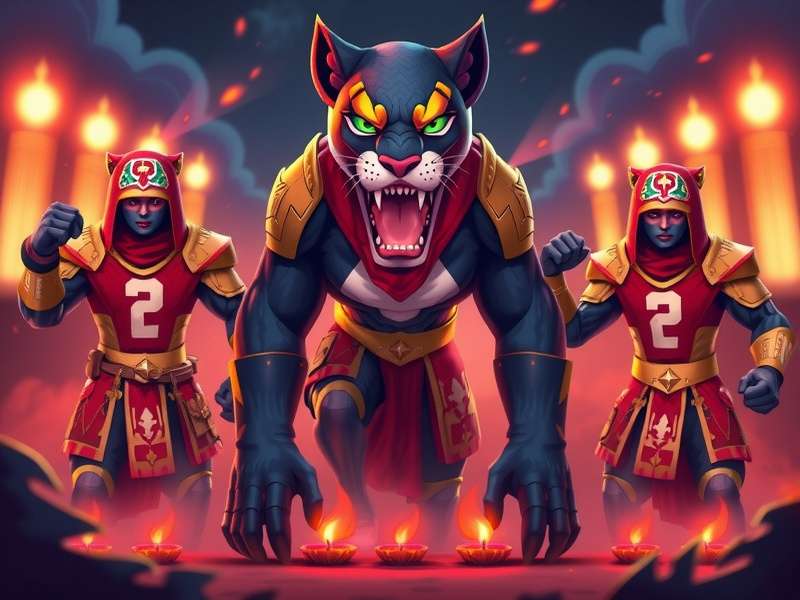
Scene from Prompt Panther’s 2024 Diwali event, showing players celebrating with diyas and fireworks
Holi Event: Holi Hai!
Holi (the Festival of Colors) is another popular event in Prompt Panther, running for 10 days in March. The event celebrates the joy and unity of Holi, with colorful content and fun missions:
- Colorful Outfits: The “Holi Ranger” (male) and “Holi Queen” (female) outfits, featuring bright colors and splashes of holi powder, are available as event rewards.
- Color-Based Weapons: The “Rangoli Dagger” (a dagger that leaves a trail of colored powder) and the “Gulal Cannon” (a weapon that shoots clouds of holi powder) can stun enemies and deal damage.
- Event Missions: Missions like “Spread the Colors” (throwing holi powder at NPCs and enemies), “Protect the Holi Bonfire” (defending a bonfire from Asura minions), and “Collect Colorful Flowers” (gathering flowers to unlock rewards) are fan favorites.
- Team-Based Mini-Game: The “Holi Color War” mini-game allows players to team up and compete to cover the most area of the map with their team’s color. The winning team receives exclusive rewards.
The Holi event is particularly popular among younger players, who enjoy the game’s playful take on the festival. In 2025, the event had over 9 million participants, with players spending an average of 45 minutes per session during the event.
Regional Campaigns: Celebrating State Cultures
In addition to national festivals, Prompt Panther also runs regional campaigns that celebrate the unique cultures of India’s states. These campaigns are tailored to specific regions, with content that resonates with local players.
Examples of regional campaigns include:
- Tamil Nadu Campaign: Pongal Perunal: Celebrating Pongal (the harvest festival), this campaign features Tamil-themed outfits, weapons, and missions. Players can collect “Pongal Rice” to restore health and defeat the “Pongal Asura” (a boss inspired by the myth of Makara Sankranti).
- Punjab Campaign: Baisakhi Festival: This campaign celebrates Baisakhi (the Sikh new year and harvest festival) with Punjabi-themed content, such as the “Bhangra Warrior” outfit and the “Sikh Sword” weapon. Missions include “Harvest the Crops” and “Defend the Gurudwara.”
- Gujarat Campaign: Navratri Garba: Celebrating Navratri, this campaign features Garba-themed outfits and a mini-game where players dance to Garba music to defeat enemies. The “Garba Dandiya” weapon (a pair of decorated sticks) is exclusive to the campaign.
These regional campaigns are rotated throughout the year, ensuring that players from all states feel represented. Raj Games Studios often partners with local celebrities and influencers to promote these campaigns, further increasing their popularity.
Brand Partnership Campaigns
Prompt Panther has also partnered with several Indian brands to create exclusive in-game campaigns. These partnerships not only bring new content to the game but also offer players real-world rewards.
Notable brand partnerships include:
- Paytm Campaign: Players who use Paytm to make in-game purchases receive exclusive “Paytm Panther” outfits and bonus Shakti Gems. The campaign also includes missions where players can collect Paytm cashback rewards.
- Amul Campaign: Celebrating Amul’s 75th anniversary, this campaign features the “Amul Panther” outfit (adorned with Amul’s logo) and missions where players collect Amul milk packets to unlock rewards. Players who complete all missions receive free Amul products via home delivery.
- IRCTC Campaign: In partnership with IRCTC (Indian Railway Catering and Tourism Corporation), this campaign allows players to collect “Train Tickets” in-game to unlock exclusive travel-themed content. Players can also enter a contest to win free train tickets to Indian destinations.
These brand partnerships have been mutually beneficial, with brands gaining exposure to Prompt Panther’s large player base and players receiving valuable rewards.
Community Engagement in India
Prompt Panther has built a vibrant and active community of Indian players, with millions of players interacting with each other and the game’s developers on various platforms. The game’s community is known for its inclusivity, with players from all regions and backgrounds coming together to share tips, strategies, and experiences.
Community Platforms
Prompt Panther’s community is spread across multiple platforms, including:
- Facebook Groups: There are over 500 Prompt Panther Facebook groups in India, with the largest group (“Prompt Panther India Official”) having over 2.5 million members. These groups are organized by region, language, and game mode, allowing players to connect with others who share their interests. Players often post tips, screenshots, and videos of their gameplay, and the game’s developers regularly engage with fans in these groups.
- WhatsApp Groups: WhatsApp is extremely popular in India, and there are thousands of Prompt Panther WhatsApp groups for players to connect with friends and clan members. These groups are used for coordinating co-op missions, sharing event updates, and casual chat in regional languages.
- YouTube: Prompt Panther has a large presence on YouTube, with hundreds of Indian content creators making gameplay videos, tutorials, and event coverage. The game’s official YouTube channel has over 1.8 million subscribers, and top Indian gaming influencers (like CarryMinati, Mortal, and Dynamo Gaming) have collaborated with Raj Games